Incident evidence package
The incident, as filed. Signed.
A signed PDF assembling every regulatory filing linked to one breach incident into a single timestamped record — the facts as filed, with the provenance of every value. It reports filed facts; it draws no legal characterization.
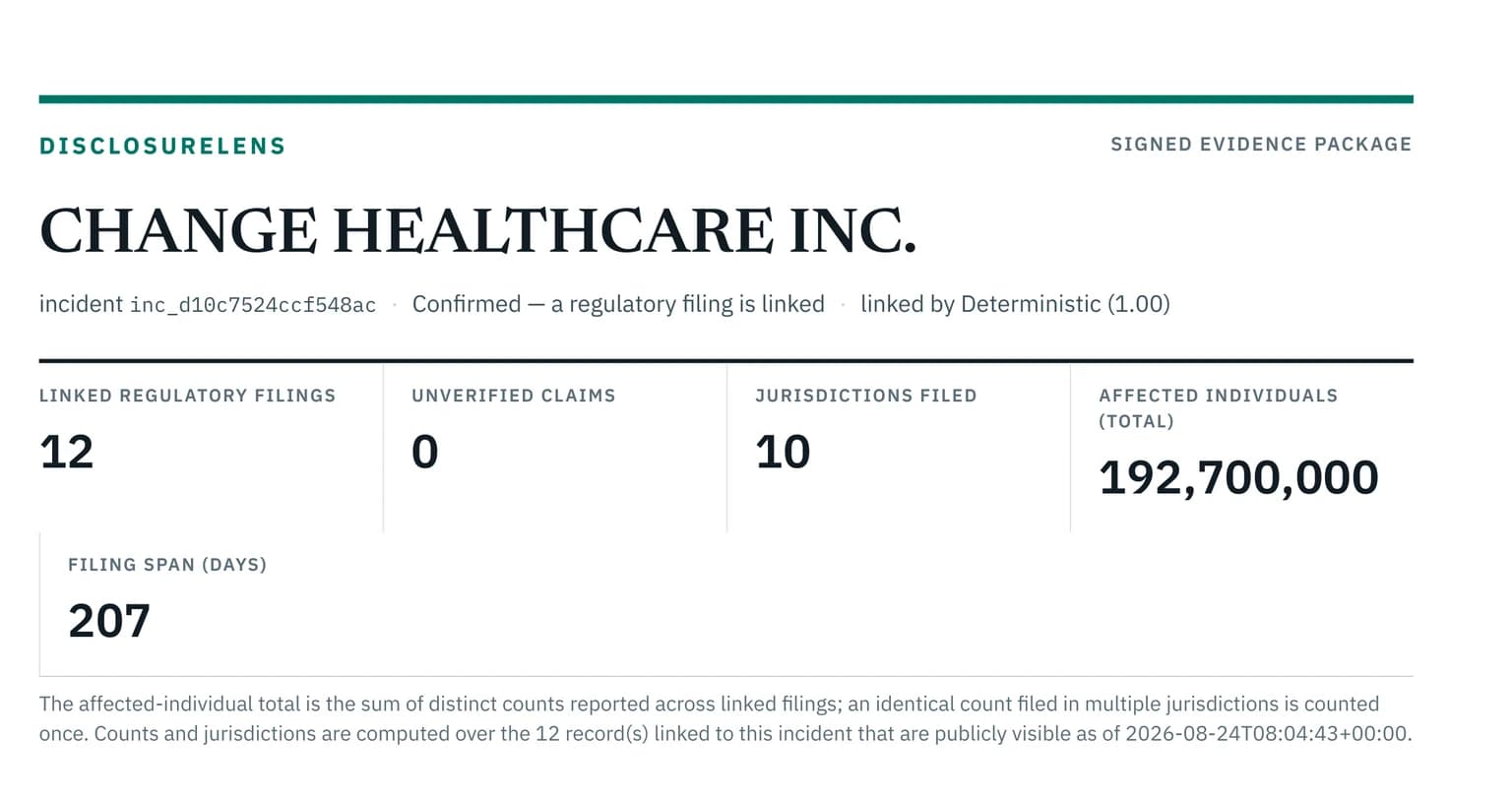
$7.99 one-time, per incident — no account required — or included in the casework plan.
Every confirmed incident’s record carries its package. No account required — the download link arrives in your browser and by email, and stays valid for 12 months. Payment is handled by Stripe.
The package freezes at first download — later changes to the live record do not change the document you bought.
What the package contains
Sixteen sections, from the opening KPI grid to the chain-of-custody appendix. Sections with nothing recorded say so — an explicit “none recorded” line, never a silent omission.
- Every linked filing. Each regulatory filing linked to the incident — source, jurisdiction, filed date, and the linkage method and confidence that placed it there.
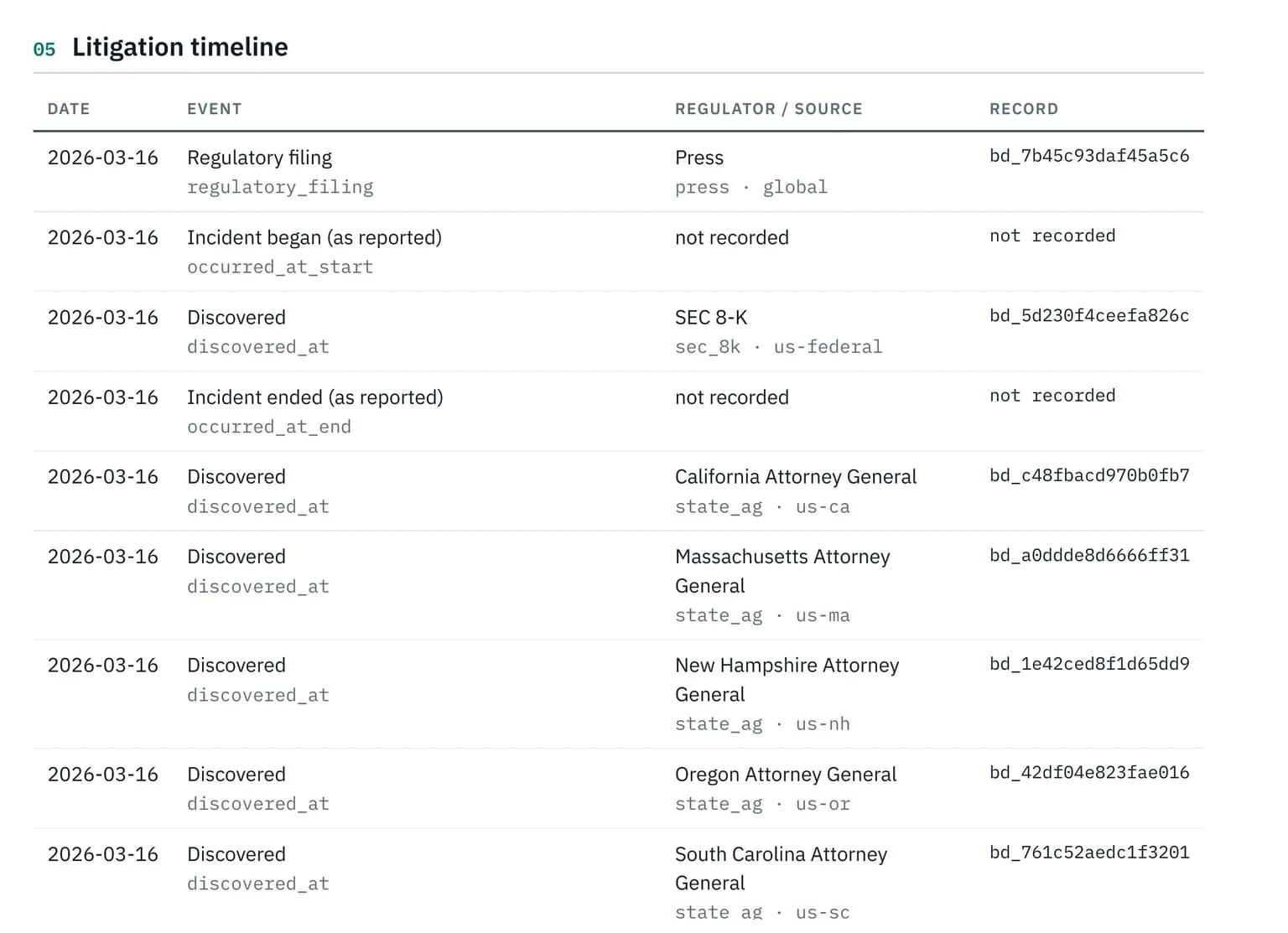
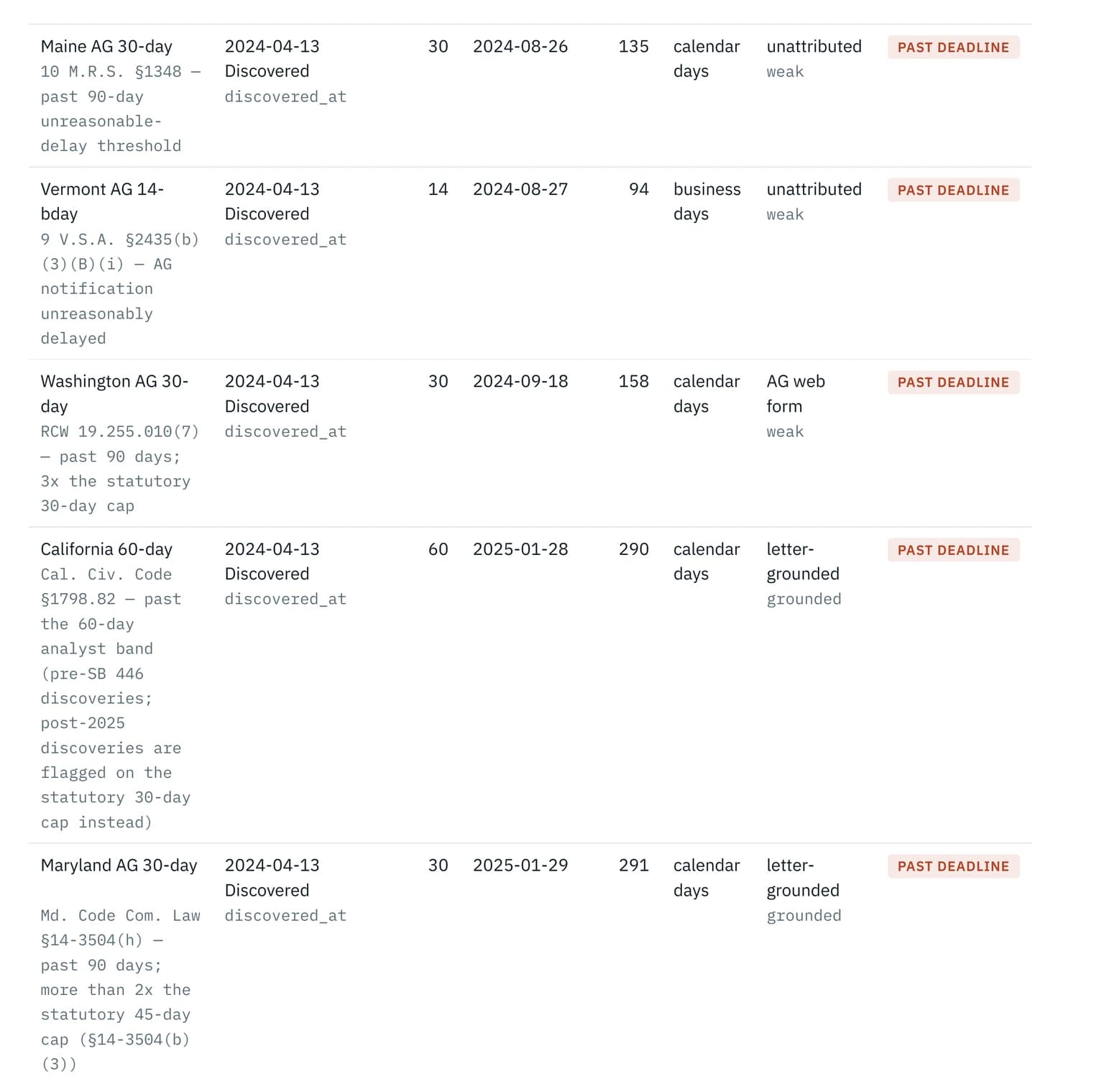
- Litigation timeline and notification clocks. Chronological events reconstructed from the filings, recorded intervals between them, and each statutory notification clock with its recorded start, deadline, day basis, and status.
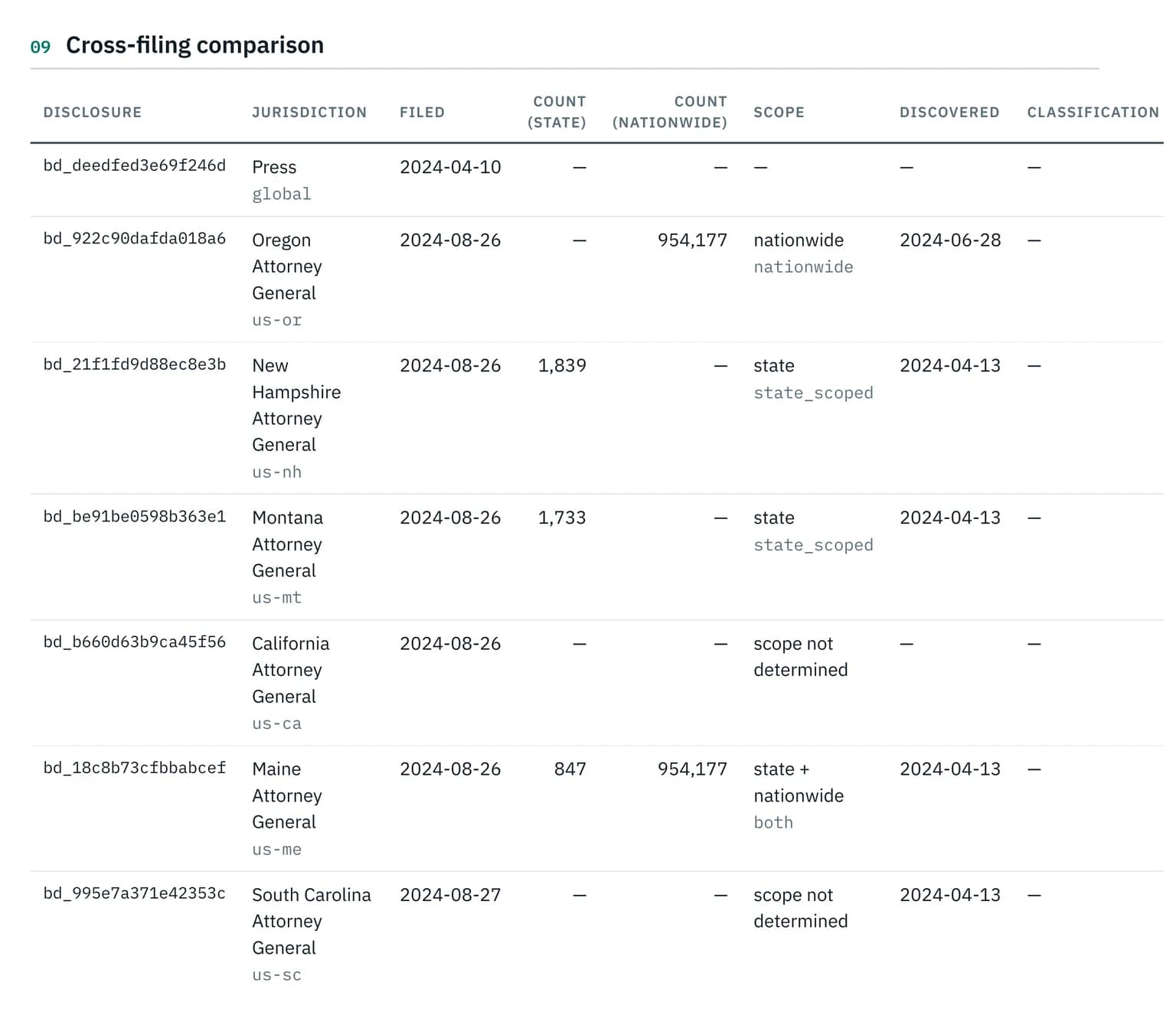
- Cross-filing comparison. The same incident as reported to different regulators, side by side — recorded differences between commensurable fields, scope revisions, and supplemental or amended filings.
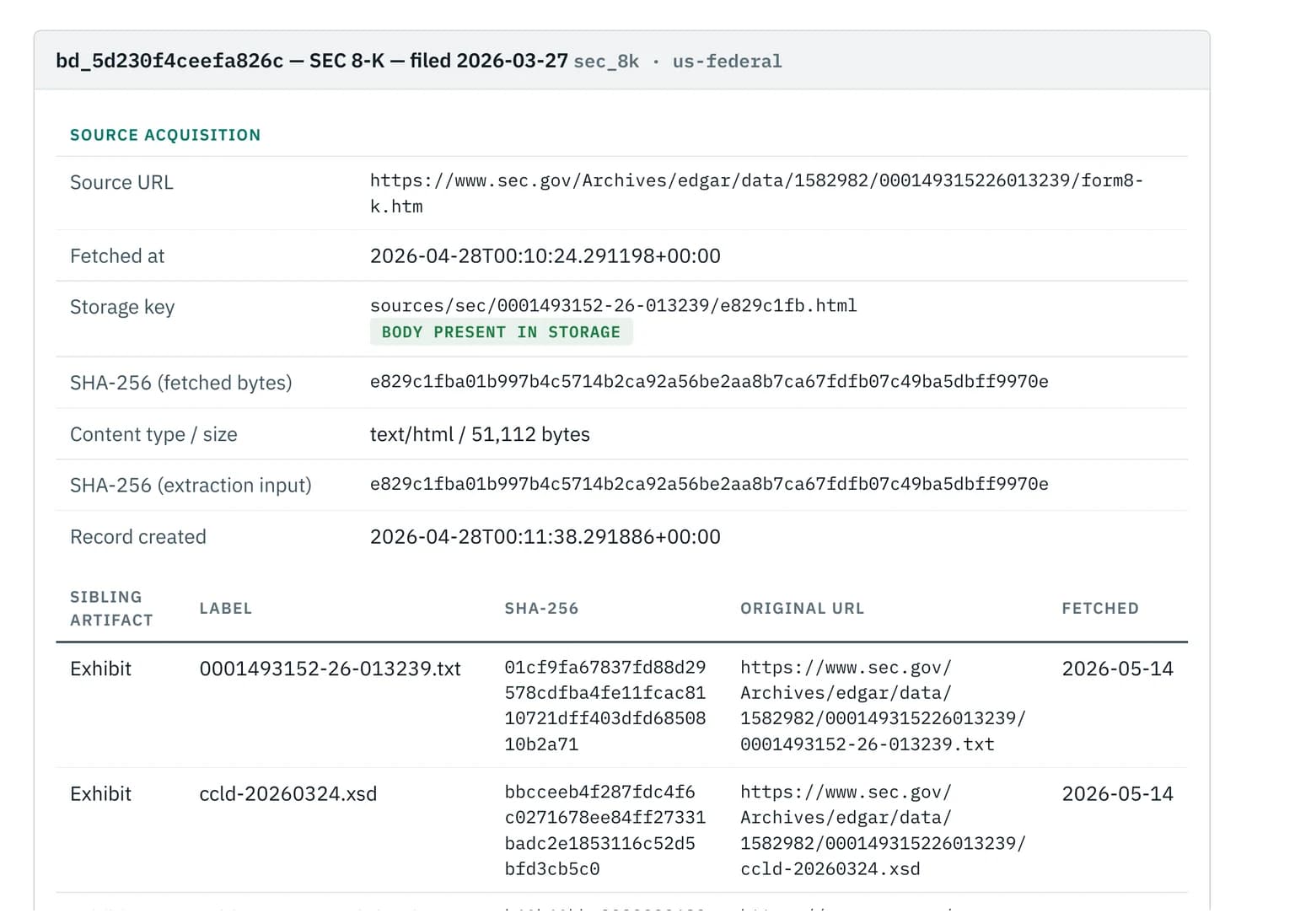
- Chain-of-custody appendix. Per filing: the source URL, fetch timestamp, SHA-256 of the bytes as fetched, content-addressed storage key, and the extraction model and prompt version that produced the structured record.
- Signed and tamper-evident. PAdES-B signature with byte-range tamper detection; the signer certificate fingerprint is printed in the footer so the document verifies independently of us.
Inside a real package
Unedited crops from packages generated against the live record. The largest current package assembles 77 regulatory filings from a single vendor breach into one document.
The litigation timeline reconstructs the incident from the filings themselves — who was told what, when, in which venue.
Each statutory notification clock is computed from recorded dates and shown with its inputs — including how well-grounded the start date is.
Regulators hear different numbers. The cross-filing comparison puts every filing's figures side by side and labels each one's scope.
Appendix A records, for every filing, where the bytes came from and how to prove they haven't changed.
The document carries its own verification details in print, not just in PDF metadata.

Assembled, not asserted
The underlying filings remain public at their sources. The package adds assembly, cross-filing comparison, provenance hashes, and a digital signature — it does not alter the records.
Provenance to the byte
Hashes at fetch time and at extraction input, the extraction model and prompt version per filing, and a server-side audit row for every generated document.
Frozen when you buy
Your copy is stored under a content-addressed key at first download and served unchanged for the life of the link.
The small print, up front
The signature is PAdES-B with byte-range tamper detection, made with our own published signing certificate — the fingerprint is printed in the document footer. A PDF reader that trusts only certificate-authority-issued signers will list the signer as unknown; the check that matters is that the fingerprint matches the published one and the byte range is intact.
The package is described by what it contains. It reports filed facts with their provenance; it draws no legal characterization of any company. Where a source document is not retained in our archive, or was re-archived from a later fetch rather than the original capture, the custody appendix says so on that row rather than implying otherwise.